
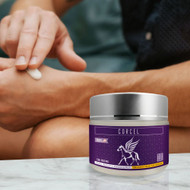
What are the best CBD products for pain management?
Posted by Master Dispensary team on Feb 8th 2021
Quick Answer
CBD sports cream is a topical product designed to be applied directly to the skin, often as part of a post-workout or body-care routine. Some small clinical studies have reported encouraging findings for particular pain conditions, while other trials have found no measurable improvement in exercise-related soreness. In other words, CBD cream is worth understanding—but the formulation, ingredients, skin compatibility, and quality of the evidence matter more than promises printed on the jar.
You finish a workout, spend an afternoon moving furniture, or wake up with shoulders that would rather you hadn't slept quite that way. Naturally, your next thought is: What can I do for these tired muscles?
It's easy to see why CBD sports creams have found an audience. They fit into a familiar ritual: a little time, a little massage, and some attention to the part of your body that has been working overtime. But if you've ever read a CBD cream label, you've probably noticed how quickly a simple skincare product can turn into a very ambitious promise.
So let's get past the hype. What makes a CBD topical different from an oil or gummy? What has research actually found? And how do you recognize a thoughtfully formulated cream before spending money on one?
In This Guide
Why Are CBD Sports Creams Part of the Recovery Conversation?
For people who train regularly—or simply lead active lives—recovery is more than a trend. It's the collection of small habits that help you feel ready for whatever is next: rest, movement, hydration, stretching when appropriate, and paying attention when your body needs a break.
A CBD sports cream offers a different kind of format from something you swallow or inhale. You apply it to a particular area, and the process can be as simple as working a cream into your hands, calves, shoulders, or another spot where you want some personal care.
What makes the category interesting isn't a guarantee of relief. It's the meeting point of cannabinoid research, skincare formulation, and the physical ritual of massage. Those are three different things, and a good product description should help you tell them apart.
Does CBD Cream Actually Help With Sore Muscles or Joint Discomfort?
This is where the science becomes more interesting than the marketing. Researchers are studying topical CBD in different settings, but there isn't one answer that applies to every ache, every cream, or every person.
An Encouraging Signal for Certain Joint Symptoms
In a small randomized clinical trial published in 2022, 18 people with thumb basal joint arthritis used a topical CBD preparation or a control cream. Researchers reported improvements in certain pain and disability measures during the CBD treatment period. It's an encouraging finding, but a small, condition-specific study isn't proof that an over-the-counter sports cream treats arthritis generally.
A Different Result for Post-Workout Soreness
In a randomized pilot study published in 2025, researchers tested CBD cream after a demanding lower-body exercise session. They did not find significant benefits for muscle soreness, recovery, or performance compared with the study's controls. The trial was relatively small, but it reminds us not to turn promising early research into a universal recovery claim.
The useful takeaway: Different conditions, different products, and different study designs can lead to different findings. The American Academy of Orthopaedic Surgeons also notes that evidence for CBD in pain care remains inconclusive. A sports cream is not a substitute for evaluating persistent or unexplained pain.
And there's a practical difference between a comfortable skincare routine and a treatment for a medical condition. In the United States, no CBD product is FDA-approved to treat pain. That matters when reading labels that promise to cure an injury, reverse inflammation, or speed up healing. Read the AAOS CBD FAQ for more on that distinction.
CBD Cream vs. CBD Oil or Gummies: What's Actually Different?
If you're familiar with CBD oils and gummies, the difference may seem obvious: one goes on your skin, the others are taken by mouth. But the real distinction is the way each formula is designed and how its ingredients may be absorbed.
| Format | How It's Used | What to Compare |
|---|---|---|
| CBD cream or balm | Applied to the skin | CBD content, base ingredients, skin feel, fragrance, testing |
| CBD oil or tincture | Typically used orally or under the tongue | Concentration, serving size, extract type, testing |
| CBD gummies | Swallowed and digested | CBD per piece, ingredients, sugar, serving information |
A topical is often chosen because it allows someone to focus the application on a particular area. That doesn't mean all of the CBD's biological effects are guaranteed to stay in that area. Skin absorption depends on the formulation, and some specialized topical or transdermal products can deliver measurable CBD into the bloodstream.
That is why we wouldn't say creams act instantly, or that they can never interact with medications. The route matters, but so does the product itself. A 2024 human study of commercially available CBD topicals documented systemic CBD absorption with certain formulations.
The Formula Matters: Cream, Balm, Gel, and Everything Else in the Jar
Two CBD topicals can list a similar amount of CBD yet feel completely different on your skin. One may be thick and rich; another may be light and quick to spread. That isn't necessarily a quality difference. It's a formulation choice.
Creams and Lotions
Creams and lotions blend moisturizing ingredients with water and oils. They're often appealing when skin feel and easy application are part of the experience. If your skin is dry or sensitive, the fragrance and preservative ingredients may matter as much as the cannabinoid label.
Balms and Salves
These are generally richer, oil- or wax-based preparations. Some people enjoy them for massage because they create more glide and stay on the skin longer. Again, that tactile experience should not be mistaken for proof of a CBD-specific pain-relieving effect.
Gels and Cooling Formulas
A gel may feel lighter, while ingredients such as menthol can create a cooling sensation. If a cream feels cool or warm right away, read the ingredient list: the sensation may come from menthol or another component rather than from CBD. Any pain-relief claims for these additional ingredients should be supported by the appropriate product labeling and regulatory status.
Full-Spectrum, Broad-Spectrum, or CBD Isolate?
Some formulas use CBD isolate; others contain broad-spectrum or full-spectrum hemp extracts. These labels describe differences in composition—not a ranking of effectiveness. A full-spectrum topical may contain other cannabinoids, including THC, so a current batch-specific lab report is especially helpful. The best choice starts with knowing what's inside, not assuming that more ingredients must mean a better result.
How to Read a CBD Sports Cream Label Without Guessing
A good product label should make your decision easier. Here's what deserves a closer look before you choose a topical.
- Total CBD and container size: “1,000 mg CBD” usually refers to the entire container, not each application. Compare products of similar size rather than relying on the biggest number.
- Ingredients beyond CBD: menthol, essential oils, fragrance, moisturizers, or other active ingredients can affect the product's feel and suitability for your skin.
- Extract type: isolate, broad-spectrum, and full-spectrum aren't interchangeable terms.
- Third-party testing: check whether the Certificate of Analysis (COA) matches the batch and what it actually measures, including cannabinoids and any contaminant panels.
- Instructions and warnings: look for directions, storage guidance, use restrictions, and allergen information.
One simple rule? A transparent label is more valuable than an impressive-sounding promise.
A Few Sensible Things to Know Before Applying a New Topical
Skin is personal. A formula that feels lovely to one person may be irritating to someone else—and that can be caused by fragrance, botanicals, preservatives, or other ingredients, not necessarily CBD itself.
Follow the manufacturer's directions, and consider testing a small area first when trying a new skincare product. Avoid broken or irritated skin unless the product is specifically intended for it. If you notice burning, rash, swelling, or worsening irritation, stop using the product; seek medical advice if symptoms are significant or persist.
If you take prescription medication, have a diagnosed pain condition, or are pregnant or breastfeeding, ask a healthcare professional about CBD products rather than assuming a topical is automatically interaction-free. Severe, persistent, or unexplained pain deserves an appropriate medical evaluation.
Frequently Asked Questions
Does CBD sports cream help with muscle soreness after a workout?
The evidence is still developing. Some people include CBD cream in their personal body-care routines, but a controlled 2025 pilot study did not find significant improvements in exercise-induced soreness or recovery from the CBD cream tested. Results may differ across formulations and situations, so universal claims aren't justified.
Is CBD cream the same as a pain-relief cream?
Not automatically. CBD is an ingredient, while a pain-treatment claim is a regulated medical claim. There is no FDA-approved CBD product for treating pain. A topical containing additional ingredients should be evaluated according to its complete label and intended use.
How quickly does CBD cream start working?
There's no established universal onset time for CBD cream. The product's texture or cooling ingredients may create an immediate skin sensation, but that does not establish how quickly—or whether—CBD itself has a particular effect.
Can CBD cream help with arthritis or joint discomfort?
Some small clinical trials, including a 2022 study in people with thumb basal joint arthritis, have reported encouraging results. But larger, higher-quality studies are needed, and those findings should not be generalized to every joint condition or commercial topical.
Will CBD sports cream make me feel high?
CBD itself is not intoxicating in the way THC is. Standard skin-applied CBD products generally aren't chosen for intoxication, but cannabinoid content and delivery technology vary. Always check the THC content and product documentation.
Can CBD topicals interact with medications?
It would be inaccurate to say interactions are impossible. Systemic exposure may be lower with some skin-applied products than with products taken orally, but research has shown that certain formulations can deliver CBD into circulation. Ask a pharmacist or clinician if you use medications with known interaction concerns.
Is full-spectrum CBD cream better than CBD isolate?
Neither is automatically better. Full-spectrum, broad-spectrum, and isolate products contain different cannabinoid profiles, but there isn't good evidence that one category of topical consistently produces superior results. Compare the actual ingredients, testing, and intended use.
What should I check before buying a CBD cream online?
Start with the full ingredient list, CBD amount, container size, directions, and recent batch-specific COA. Then check that the product can be sold and shipped to your location. Availability and payment-processing eligibility can differ even when a product is marketed as hemp-derived.
The Master Take
A CBD sports cream doesn't need a dramatic promise to be interesting. Sometimes the appeal is simply a thoughtful topical formula, good ingredients, a comfortable application, and a little time dedicated to taking care of yourself.
The research on pain and recovery is still taking shape, so we wouldn't treat every cream as a proven solution. But we do think consumers deserve better information about what is in the jar and what the evidence does—and doesn't—say.
Choose the formula, not the promise. And if you're exploring CBD beyond skincare, you can learn about other formats in our CBD for People collection. Product selection, availability, and shipping eligibility may vary.
Educational content only. This article is not medical advice and does not claim that CBD topicals prevent, treat, or cure a disease. Consult a qualified healthcare professional for persistent pain or questions about CBD and medications.